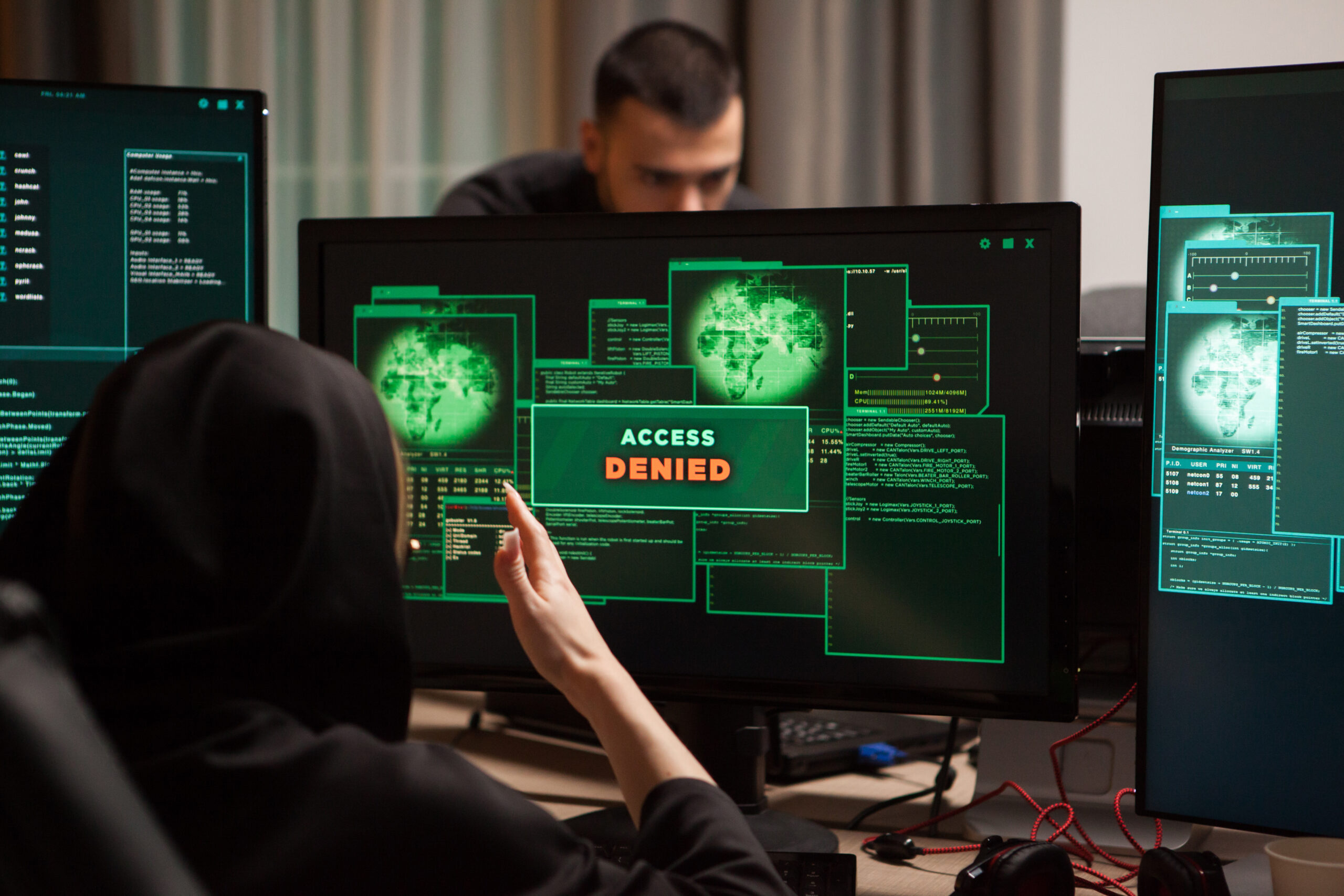










Can AI Outsmart Hackers? The Reality Behind the Hype
Artificial Intelligence has become the centerpiece of modern cybersecurity strategy. Vendors promise autonomous threat detection, predictive analytics, self-healing systems, and real-time response at machine speed. Headlines suggest a near-future where AI defends networks faster than any human analyst ever could.
But can AI truly outsmart hackers?
The answer is more nuanced than marketing claims suggest. AI is a powerful force multiplier in cybersecurity—but it is not a silver bullet. Understanding its strengths, limitations, and operational realities is essential for organizations investing in AI-driven defense.
The Rise of AI in Cybersecurity
Cyber threats have evolved dramatically over the last decade. Attackers now deploy:
-
Advanced Persistent Threats (APTs)
-
Polymorphic malware
-
Ransomware-as-a-Service (RaaS)
-
AI-generated phishing campaigns
-
Zero-day exploit automation
Traditional signature-based security tools struggle against these adaptive, fast-moving threats. This is where AI and machine learning (ML) systems enter the battlefield.
Modern AI-powered security platforms can:
-
Detect anomalies in massive datasets
-
Correlate events across distributed environments
-
Identify behavioral deviations
-
Automate incident response
-
Continuously learn from new threat intelligence
Instead of reacting to known threats, AI enables predictive and behavioral-based detection models.
How AI Actually Defends Against Hackers
To evaluate whether AI can outsmart hackers, we must examine how it operates in real-world security architecture.
1. Behavioral Analytics
AI systems analyze user and entity behavior (UEBA) to detect abnormal activity patterns.
For example:
-
An employee logging in at 3 AM from a new country
-
A service account accessing sensitive data outside baseline activity
-
Sudden lateral movement across network segments
Machine learning models flag these deviations in real-time, often before data exfiltration occurs.
2. Threat Detection at Scale
Enterprise networks generate billions of events daily. Human analysts cannot process that volume.
AI systems:
-
Aggregate telemetry from endpoints, cloud, network, and applications
-
Apply classification algorithms
-
Prioritize high-risk alerts
-
Reduce false positives
This dramatically improves Security Operations Center (SOC) efficiency.
3. Malware and Zero-Day Detection
Unlike signature-based antivirus tools, AI models analyze file behavior and execution patterns.
They can:
-
Detect previously unseen malware
-
Identify suspicious code structures
-
Analyze sandbox execution behaviors
-
Recognize encryption anomalies in ransomware attacks
This allows defense against unknown or polymorphic threats.
4. Automated Incident Response
AI-driven SOAR (Security Orchestration, Automation, and Response) platforms can:
-
Isolate infected endpoints
-
Disable compromised accounts
-
Block malicious IP addresses
-
Trigger remediation workflows
Automation reduces dwell time—the period attackers remain undetected inside systems.
Where AI Falls Short
Despite its capabilities, AI is not infallible.
1. AI Can Be Tricked
Attackers use adversarial machine learning techniques to:
-
Poison training datasets
-
Evade detection through slight behavioral changes
-
Inject malicious data into models
-
Reverse-engineer detection logic
If models are poorly trained or improperly tuned, they can misclassify threats.
2. False Positives and Alert Fatigue
Poorly calibrated AI systems can generate excessive alerts. If not optimized, they overwhelm analysts instead of empowering them.
Effective AI requires:
-
Clean training data
-
Continuous tuning
-
Context-aware modeling
-
Skilled oversight
3. Lack of Contextual Judgment
AI excels at pattern recognition but lacks human intuition, ethical reasoning, and strategic thinking.
For example:
-
Determining business impact
-
Understanding geopolitical threat motivations
-
Assessing insider threat psychology
-
Interpreting nuanced social engineering attacks
Human expertise remains essential.
Hackers Are Using AI Too
The cybersecurity arms race is symmetrical.
Attackers leverage AI for:
-
Automated vulnerability discovery
-
AI-generated phishing emails with near-perfect grammar
-
Deepfake voice scams
-
Password cracking optimization
-
Adaptive malware behavior
Large language models now enable attackers to create convincing spear-phishing campaigns at scale.
The question is no longer “Can AI outsmart hackers?” but rather:
Whose AI is more advanced—defender or attacker?
AI as a Force Multiplier, Not a Replacement
AI does not replace cybersecurity professionals. It augments them.
A mature AI-driven security architecture includes:
-
Human-led threat hunting
-
AI-powered detection engines
-
Automated containment workflows
-
Continuous threat intelligence updates
-
Governance and compliance controls
The most resilient organizations integrate AI into a Zero Trust framework, ensuring verification at every access point.
The Strategic Advantages of AI in Defense
Despite limitations, AI offers significant defensive advantages:
Speed
AI operates at machine speed—detecting anomalies in milliseconds.
Scale
It processes vast datasets across hybrid and multi-cloud environments.
Adaptability
Models continuously evolve with new threat patterns.
Predictive Analytics
Advanced systems forecast potential attack vectors before exploitation occurs.
In environments where attacks unfold in seconds, speed and scale are decisive.
The Real-World Truth
AI can outpace many traditional hacking techniques, particularly automated and opportunistic attacks.
However, highly sophisticated attackers—especially nation-state actors—still require human-led defense strategies.
The most effective cybersecurity posture is hybrid:
AI handles detection and automation.
Humans handle strategy and complex decision-making.
Organizations that rely solely on AI without governance, oversight, and skilled professionals create blind spots.
The Future of AI vs Hackers
Emerging trends suggest:
-
AI-driven self-healing networks
-
Autonomous SOC environments
-
Explainable AI (XAI) for better transparency
-
AI-enhanced deception technologies (honeypots)
-
Quantum-resistant cryptographic models
But as AI evolves, so will adversarial AI.
Cybersecurity will remain a continuous competition between offensive and defensive innovation.
Final Verdict: Can AI Outsmart Hackers?
AI can outsmart certain types of hackers—particularly automated, large-scale, and behaviorally predictable attacks.
But against highly adaptive human adversaries, AI alone is insufficient.
The future of cybersecurity is not AI vs Hackers.
It is:
AI-powered humans vs AI-powered attackers.
Organizations that understand this balance—investing in AI technology, skilled professionals, and strategic governance—will be best positioned to stay ahead in the cyber arms race.
If you’re building AI-driven security architectures or exploring certifications in AI-powered defense, understanding both the technical capability and operational limitations of AI is critical.
Because in cybersecurity, hype does not stop breaches—strategy does.